02.17.26“What Reading Jane Eyre Taught Me About The Science of Reading” by Erica Woolway
I recently tackled Jane Eyre, the Bronte sisters having escaped my assigned and pleasure reading in high school and college. As an adult reader of the novel, I was struck how many of the principles of the science of reading that we describe in The Teach Like a Champion Guide to the Science of Reading influenced my experience, even as an adult reader, and made me think about the reading experiences of our students when tackling complex texts.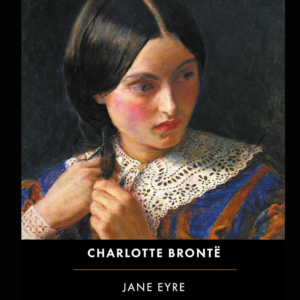
The first thing that struck me was the complexity of syntax and vocabulary in the novel. Consider these sentences from chapter one:
Each picture told a story; mysterious often to my undeveloped understanding and imperfect feelings, yet ever profoundly interesting: as interesting as the tales Bessie sometimes narrated on winter evenings, when she chanced to be in good humour; and when having brought her ironing table to the nursery hearth, she allowed us to sit about it and while she got up Mrs. Reed’s lace frills, and crimped her nightcap borders, fed our eager attention with passages of love and adventure taken from old fairy tales and older ballads ; or (as at a later period I discovered) from the pages of Pamela, and Henry, Earl of Moreland.
Beyond the sheer length of the sentence above, the archaic and challenging syntax in phrases such as “when she chanced be in good humour” or “fed our eager attention with passages of love and adventure,” could be enough to bring a student reader to their knees. Encountering words like visage, ignominy or opprobrium presented frequent barriers to my comprehension even as an adult. I certainly would have benefitted from the support of a teacher pre-teaching the most significant words or dropping in definitions when reading together as we recommend in our approach to Implicit Vocabulary.
The second and surprisingly influential aspect of my reading Jane Eyre was the role that fluency and reading aloud had on my experience. Even as a fluent reader (if I do say so myself), I benefitted tremendously from supplementing my independent reading of the book with listening to it on my Libby app, especially early in the narrative as I was first making sense of the setting and characters’ experiences.
Notably, my understanding didn’t improve because I had mastered the standard of character analysis or because I had answered 17 questions in unrelated passages about identifying the setting or mood, but because the text was read aloud to me, and meaning was imbued into the novel through a fluent and dramatic reading of this archaic text (the beautiful and varied British accents of the characters didn’t hurt either).
Not surprisingly as one of the most important principles of the science of reading illustrates, the background knowledge that I brought to this text impacted my comprehension. Not majoring in English or in the history of 19th century England, I lacked significant background knowledge that could have enriched my reading experience and the depth of my comprehension. For example, in chatting with a teacher in Wales about her teaching of Jane Eyre, she immediately spoke about it as a perfect example of gothic literature – the genre which builds on the supernatural and natural world as a way of exploring power and societal norms in a non-realistic way. This turned a lightbulb on for me as it explained the role of Mr. Rochester’s first wife as an ethereal figure in the novel – an aspect of the book that completely escaped my attention, comprehension and appreciation because I lacked the knowledge of book’s gothic genre.
Finally, the joy and pride I experienced even as an adult reader in successfully tackling an archaic and complex tome illustrates how important it is to give students similar opportunities by adequately preparing them to read old and complex and long texts in order to give them the opportunity to read and enjoy them collectively as a class. Yes, they will be hard. But in overcoming that challenge, they’ll be more likely to see themselves as capable readers. Notably, I only felt ready to read Jane Eyre because I have been reading a lot recently (likely as an escape from our current realities). Last year, I just barely met my goal of reading 50 books and the amount of time that I have spent reading has increased both my attentional capacity and my stamina.
If you’re interested in learning more about our work in the Science of Reading, we’d love to have you join us to learn more at our next workshop in Memphis on March 12-13th! We’ll be talking about the importance of harvesting attention in our increasingly distracted world, the role of fluency and background knowledge, and how to prepare readers to read (and enjoy!) complex – and whole length – books.
 19th Century Literature, Audiobooks for Literacy, Building Background Knowledge, Charlotte Brontë, Complex Texts, Evidence-Based Reading, Gothic Literature, Implicit Vocabulary, Jane Eyre, Literacy Instruction, Memphis Education Workshops, Reading Comprehension Strategies, Reading Fluency, Reading Stamina, Science of Reading, Syntax Complexity, teach like a champion, Teacher Professional Development, TLAC